FEATURE
IGNANT
ROBERT ROTH PAINTS HOW THE LIGHT GETS IN
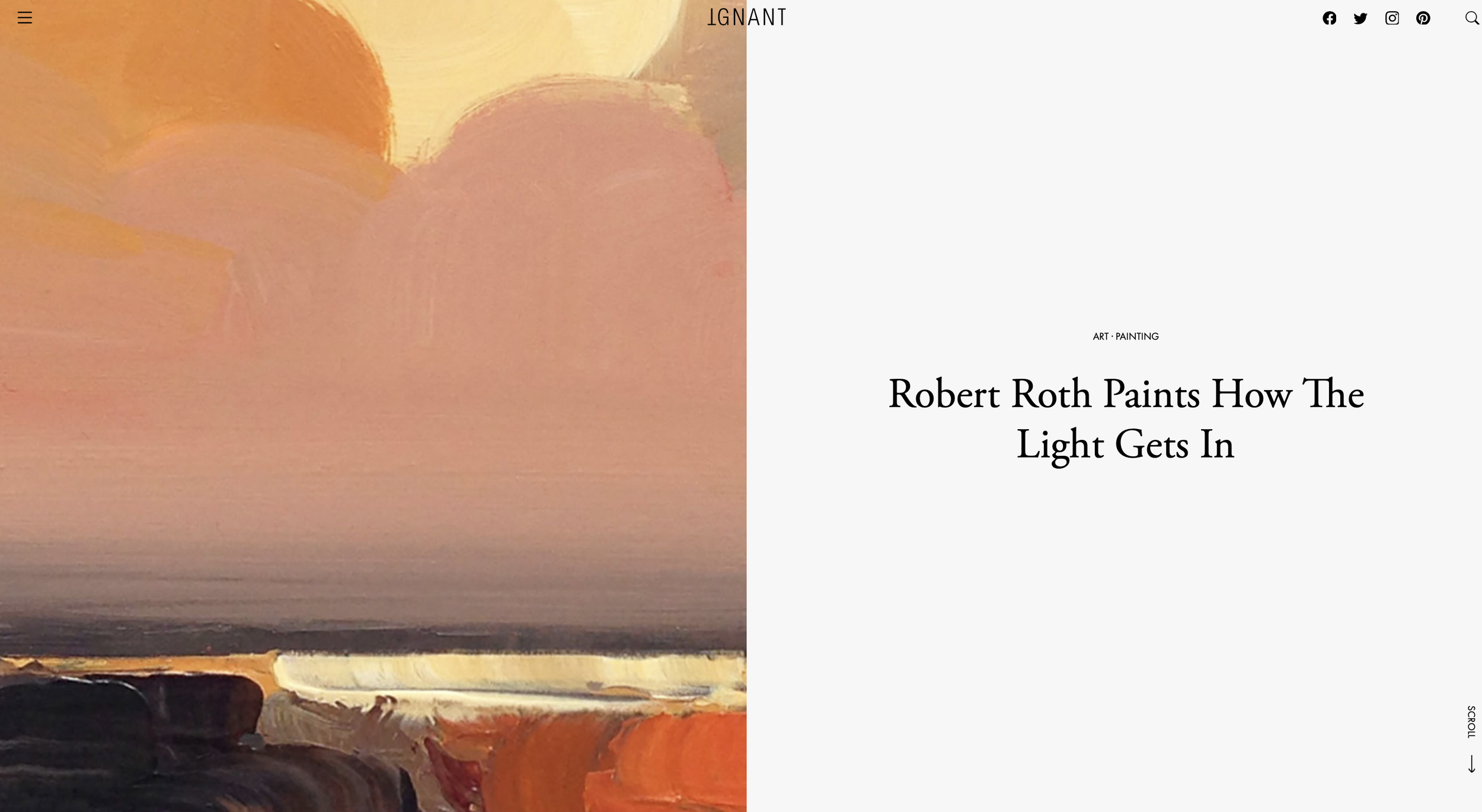
His paintings transfer the infinite quality of the sky, and its relationship to land and water, to canvas. Though Roth is often considered a landscape painter, the horizons that he paints sit low on the canvas; the land secondary to the might of the sky. Roth explains, “Skies are a powerful form of nature, revealing endless compositions of light and color.” But, when every blazing sunset is captured and posted to Instagram, often artworks that render such horizons fail to inspire any great sense of awe. Roth, with his fast, broad brushstrokes, manages to paint such scenes in new ways. His paintings transfer the infinite quality of the sky, and its relationship to land and water, to canvas. “Within my paintings, I try to achieve that sense of vastness as the reflective light travels throughout the low horizon and across the waterways, lighting up the ground,” Roth tells us. “My paintings are really just emotional studies of atmosphere and the landscape just happens to sneak in.”
- Rose Flanagan
FEATURE
BOOOOOOOM
ROBERT ROTH : THE ENERGY BETWEEN THINGS
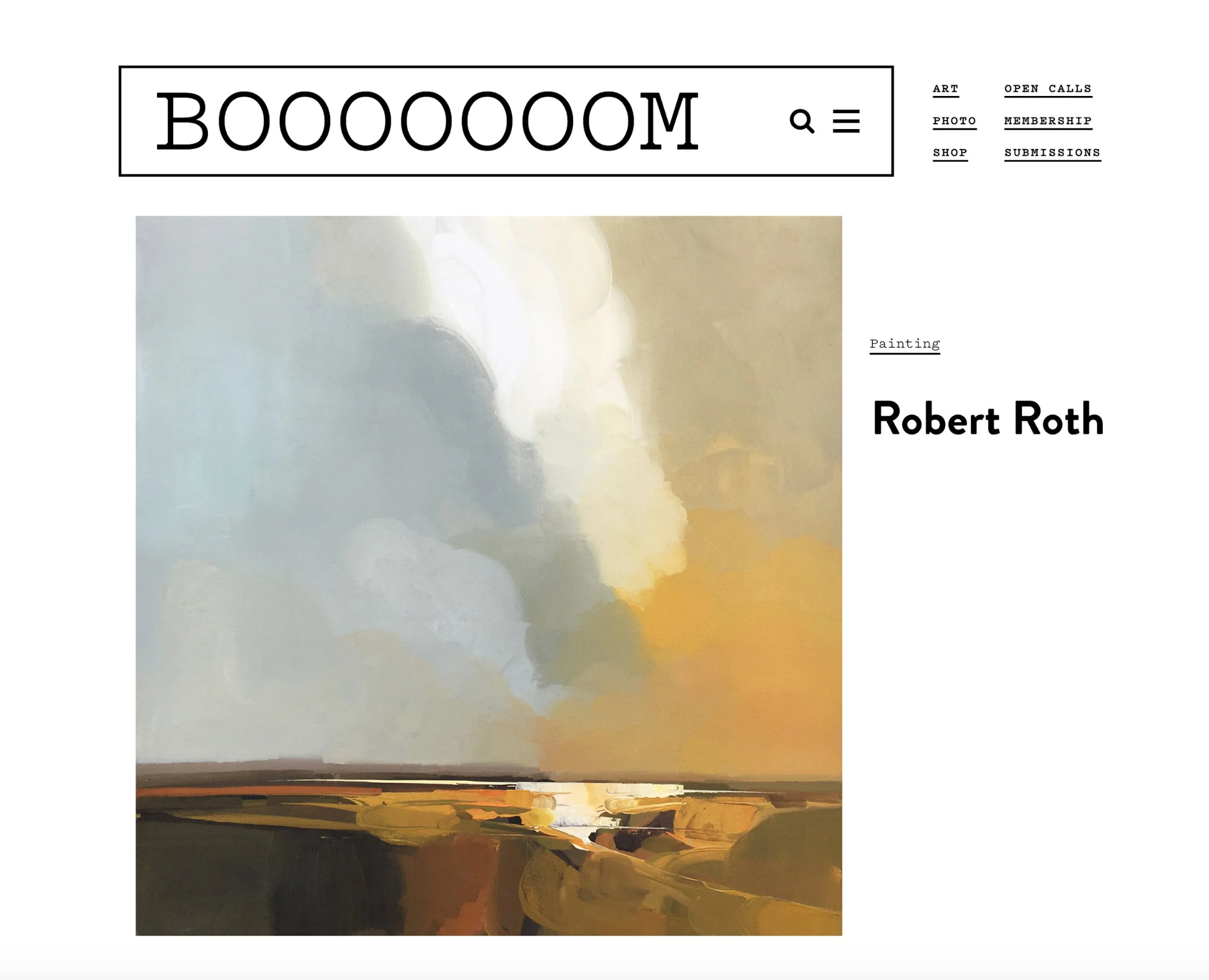
Roth’s atmospheric paintings are built from the energy and experience of nature. Shaped by the invisible currents of place—memory, perception, and the quiet hum of being in the world. Roth describes, “That feeling you get when you look up and suddenly everything feels bigger and quieter at the same time — that's what I'm chasing.”
- Jeff Hamada
REVIEW
CLEVELAND SCENE
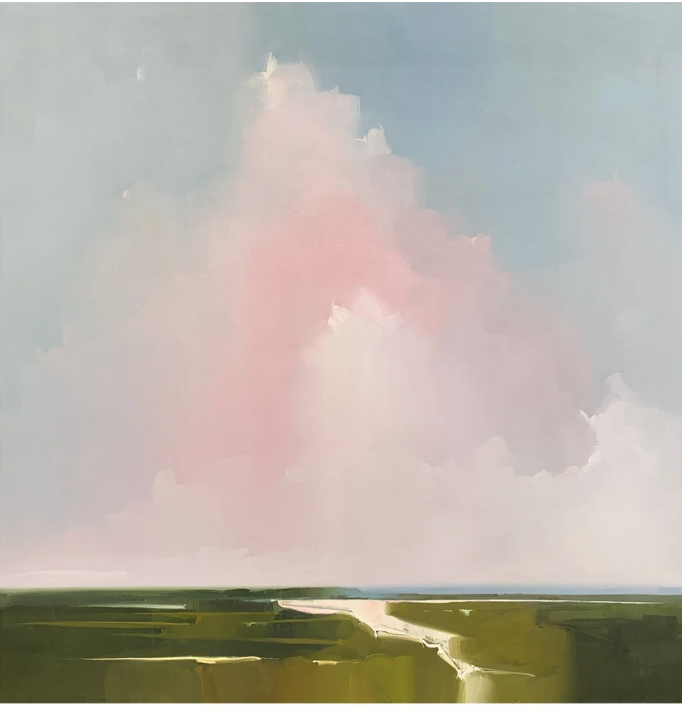
Robert Roth demonstrates a thoughtful display of paintings inspired by Long Island’s eastern shores. Acrylic dries rapidly, but Roth doesn't seem hurried, even as he captures all the sensory details of the island's active skies and marshy, windswept landscapes with a brisk, almost blunt hand. "East Hampton" is the show's most balanced, elegant entry. Here, seemingly boundless, soggy grasslands -- their subtle patchwork of greens interrupted only by occasional fingers of whitish-blue streams -- unfurl into the horizon. You can almost hear the squish beneath your feet and feel your boots getting muddy. All this takes place beneath a vast but placid sky, compounding the magnificent remoteness of the scene. This is the basic format of most images, and green, blue, and gray predominate, but in "Bay Overlook," Roth makes a tasteful exception, applying shocking touches of brilliant orange and misty pink to convey flecks of light on the water and the glow of the setting sun. The air, too, is restless. Roth brushes on thicker layers and even globs of paint to portray the onset of evening. For sheer deftness, take note of "Cove," in which Roth incorporates some minor imperfections on his wooden surface into a generally rainy composition, transforming the board's tiny pocks into precipitation, like drops of water on a camera's lens.
- Zachary Lewis
INTERVIEW With ROBERT ROTH / A FEARLESS FREEDOM
CONTEMPORARY COLLAGE MAGAZINE (UK)
Robert Roth — A Fearless Freedom.
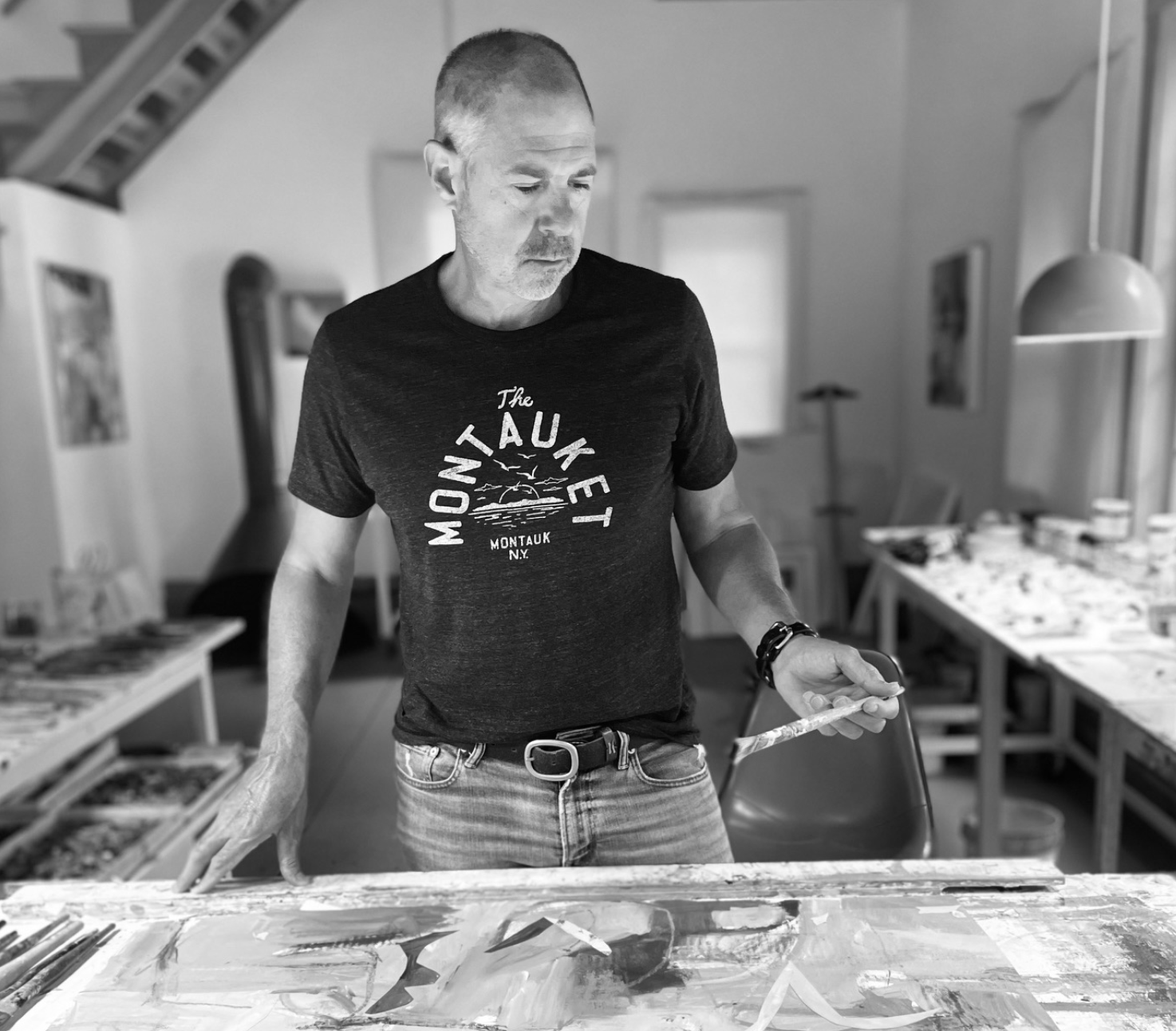
Edited excerpts from an interview with Les Jones, Contemporary Collage Magazine (UK).
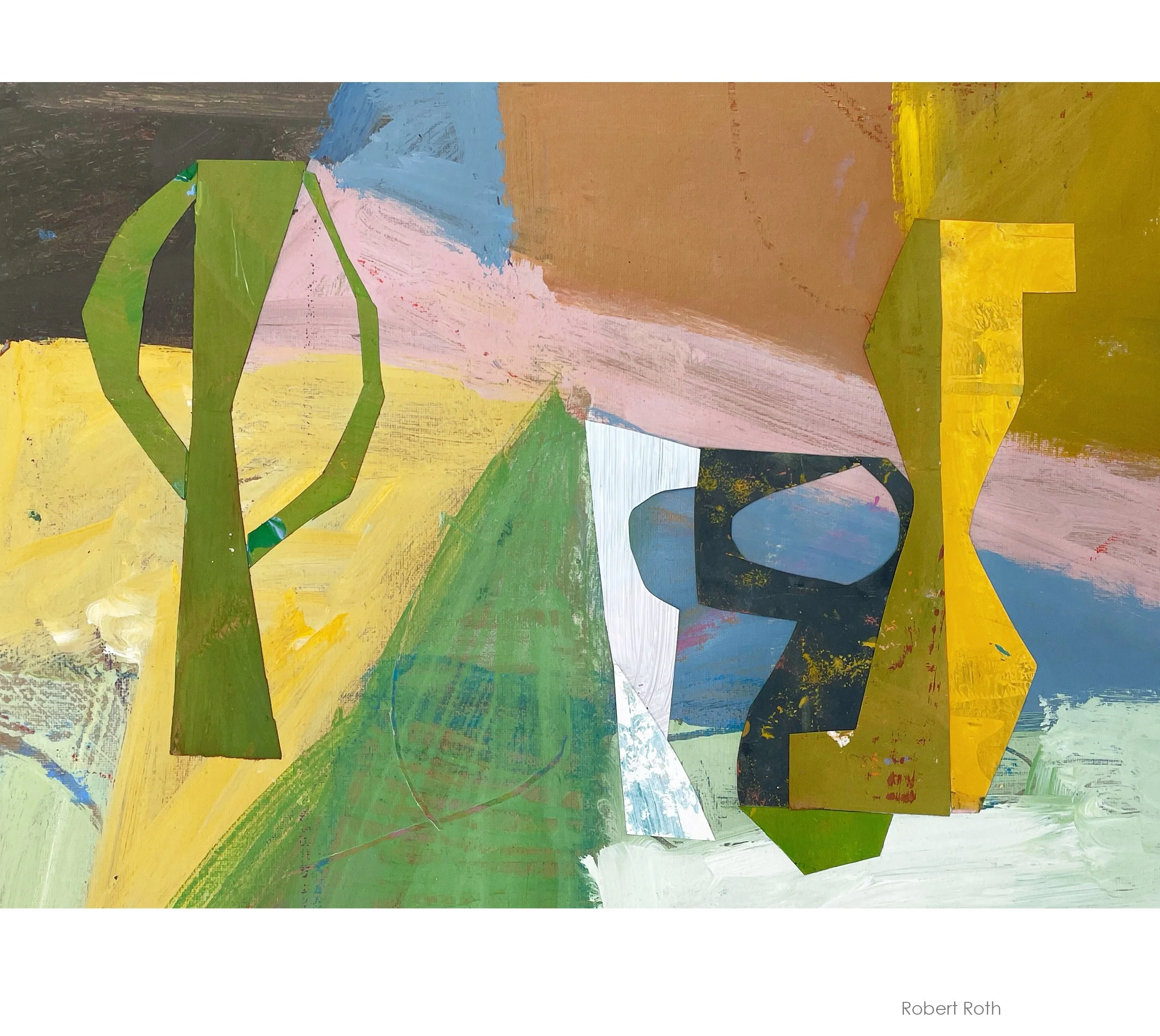
Robert Roth’s work moves fluidly between painting, drawing, and collage, guided by memory, intuition, and a deep sense of place. Whether constructing vibrant still lifes or weathered architectural forms, his work transforms familiar subjects into distinctly personal visual worlds. — Les Jones
LJ: Your collage work seems deeply connected to place—whether remembered or imagined. Is that fair?
RR: I think so. The places in my work mostly come from memory and the subconscious. I rarely work from reference. If I make a sketch or take a photograph, I absorb it and then put it away. I don't want to describe a place—I want to discover one. Most of the time, I have no idea where a piece is going when I begin. It gradually reveals itself through the process.
LJ: Do you think of yourself primarily as a painter?
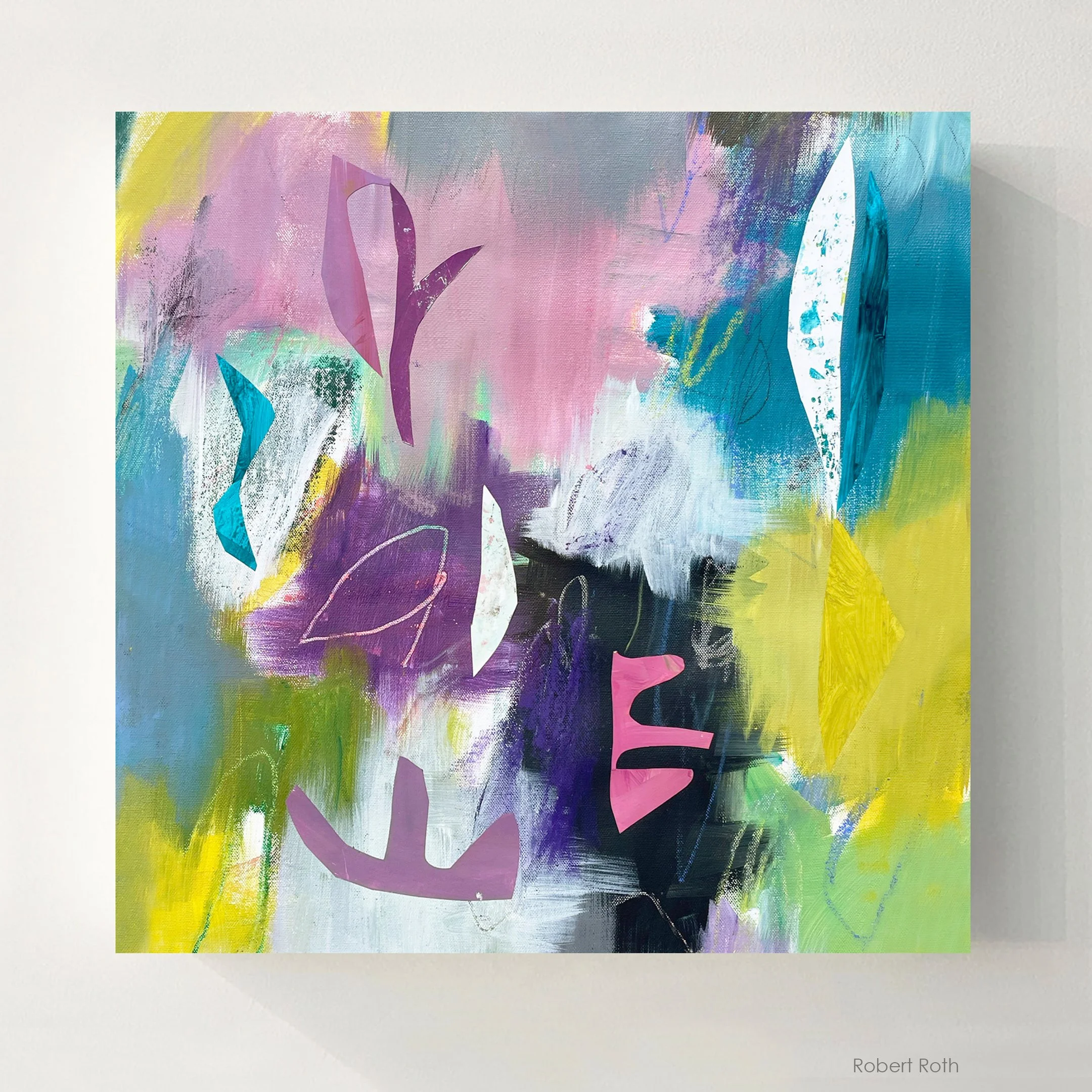
RR: Painting is central to what I do, but drawing has always been my foundation. Over time, collage became essential because it allowed me to combine painting, drawing, texture, and found material into a single visual language. If I had to choose one medium, it would probably be collage because it naturally brings everything together.
LJ: What is it about collage that continues to resonate with you?
RR: Its freedom. Nothing is fixed. You can move things, shift relationships, and completely change direction. Discovering artists like Robert Rauschenberg showed me there were no rules. That realization changed everything. My studio is filled with painted papers, printed fragments, and found materials that become an evolving vocabulary I can draw from intuitively.
LJ: Your work has a Cubist quality—flattened space and shifting perspectives.
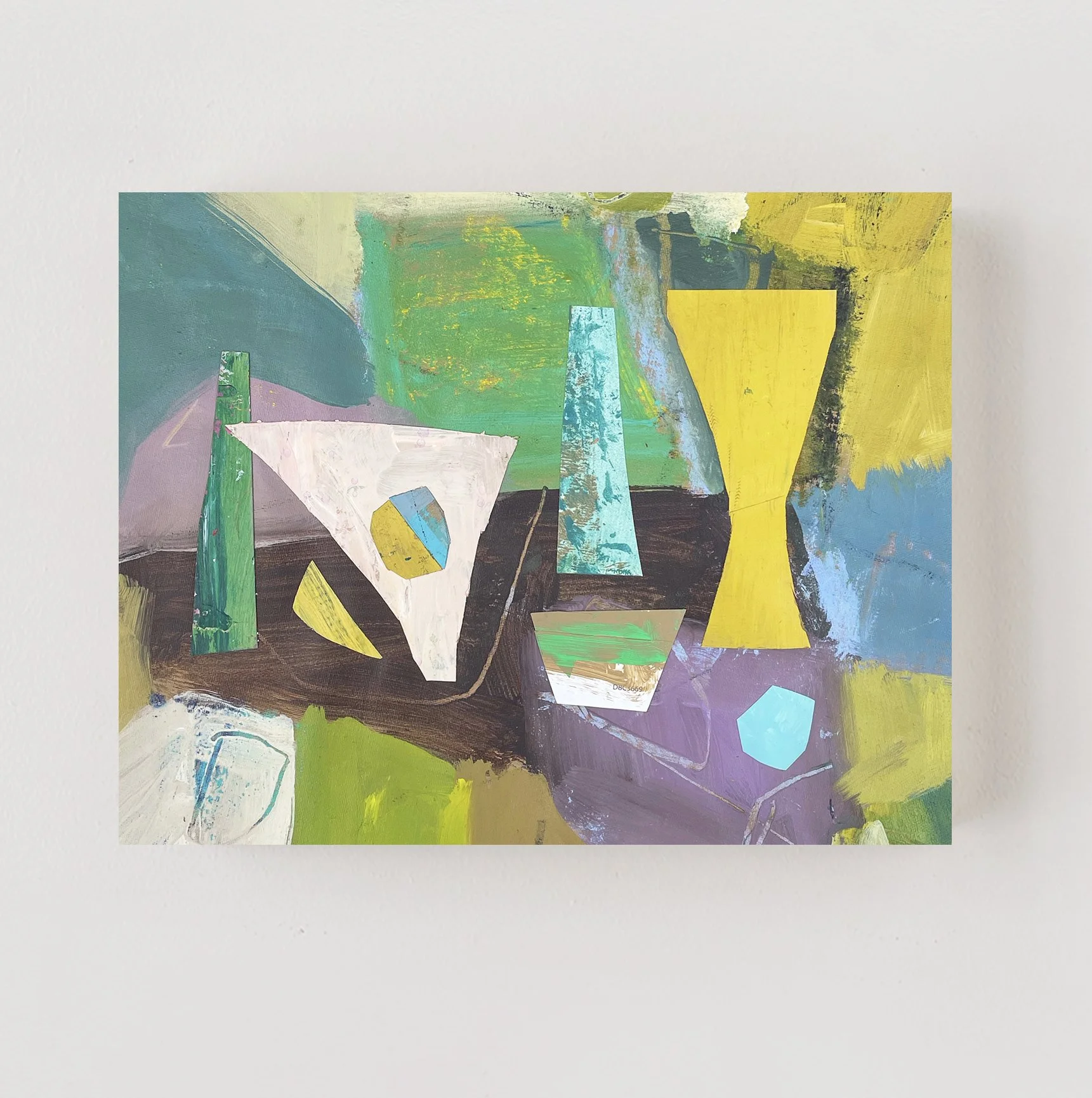
RR: That's definitely intentional. After years of painting from observation, I became more interested in inventing a visual language than describing what I saw. Collage gave me permission to compress space, simplify form, and let familiar objects drift toward abstraction. That's where the excitement is for me.
LJ: Your still lifes feel very spontaneous.
RR: They are. I often rotate the work repeatedly before it finds its orientation. The vessel forms come from memory rather than observation, while the collage and painted surfaces gradually build a conversation between abstraction and representation. I'm interested in the point where those two worlds meet.
LJ: You often say, "I don't know where that comes from." Does it feel like you're channeling something?
RR: When the work is going well, yes. The more I try to control the outcome, the less alive it becomes. The best moments happen when intuition takes over and the subconscious has room to speak. You can't force that—you simply have to keep showing up.
LJ: What advice would you give artists trying to find their own voice?
RR: Stay curious. Experiment. Change your habits. Give yourself permission to try something new — completely outside of your comfort zone. Don't focus on making something great. Focus on making something honest. That's where the real discoveries begin.
REVIEW
THE NEW YORK TIMES
"It’s easy to get lost in Roth’s work. He introduces his subject without melodrama—with simplicity and subtlety—and avoids the easy ending. His compositions hold a graceful choreography, ringing bright and true."